Biology: Concentration in Microbiology
Bachelor of Science
About this program
The Bachelor of Science in Biology: Concentration in Microbiology trains you to study tiny life — from bacteria and fungi to viruses and algae — focusing on their roles in health, disease, and the environment. You can take courses from virology, immunology, parasitology in this program. You’ll gain hands-on lab experience and choose electives in areas like medical or environmental microbiology. The program prepares you for careers in research, public health, clinical labs, biotech, or graduate study.
Program Curriculum and Requirements
Program Scope
The Bachelor of Science with Concentration in Microbiology offers training in the study of bacteria, algae, protozoa, fungi and viruses in terms of their ecology, biochemistry, physiology, genetics and role in disease processes.
A concentration in Microbiology is suited for students preparing for a number of careers, including healthcare, quality control microbiologists, research technicians and associates in hospitals, government laboratories and biotechnology.
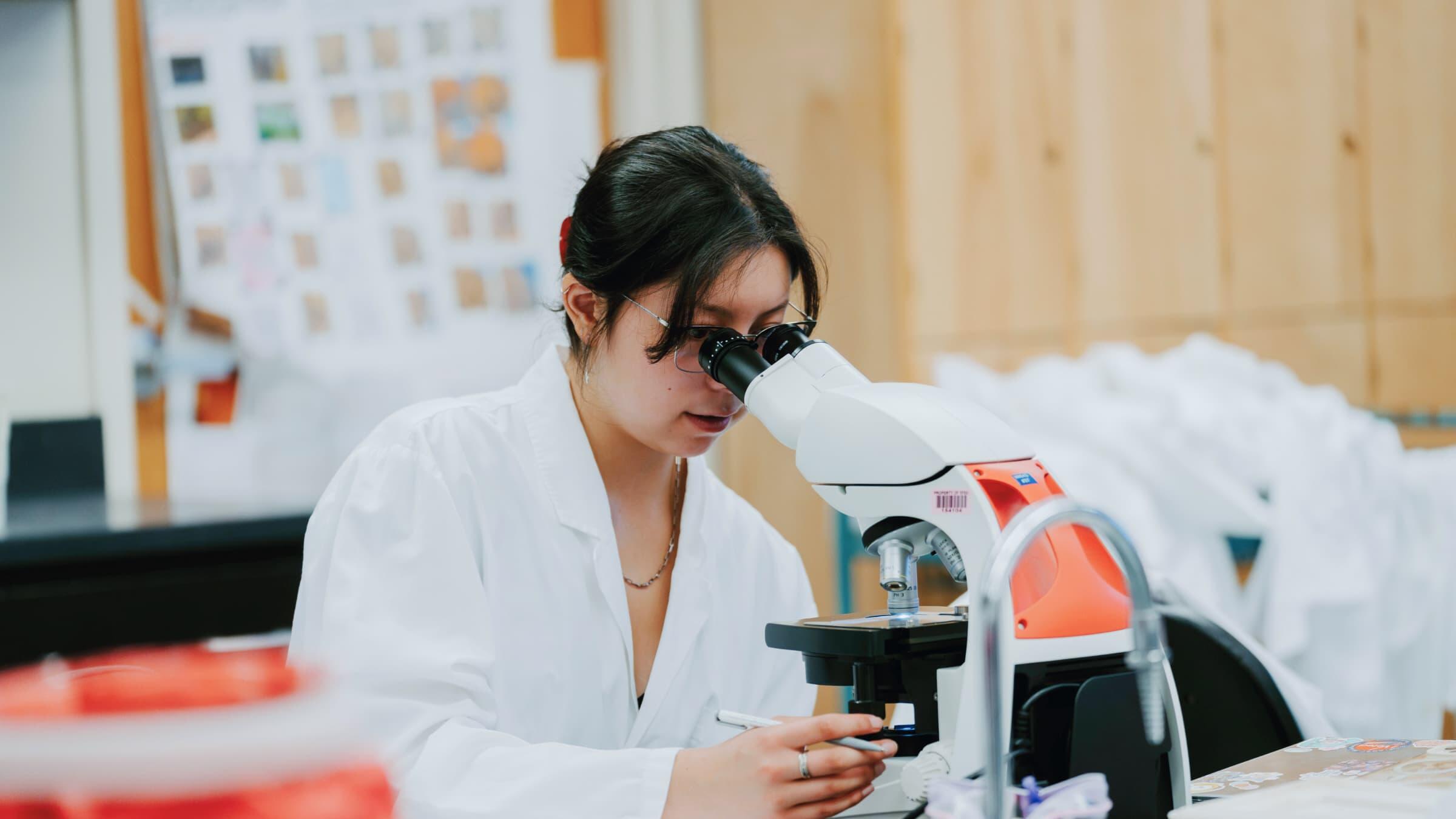
In all of our concentrations, research experiences in the labs of our world-class faculty and instructors are an integral part of student training. Hands-on experiences in our research labs, through the Biology Undergraduate Research Program (BURP), prepare our graduates for high-level jobs in industry or further training toward a higher degree.
Program Learning Outcomes
- Understanding the process of science: students can design an experiment with the appropriate control groups to test a hypothesis.
- Quantitative reasoning: students can interpret a graph or dataset to determine if the results of an experiment support or reject a hypothesis.
- Relationship between science and society: students can weigh the costs and benefits to society of the use of recent scientific and technological developments.
- Evolution: students can explain the role that variation between individuals plays in the processes of natural selection and evolution.
- Relationship between structure and function: students can explain how a change in the structural characteristics of a molecule, tissue, or organism will affect its function.
- Information flow and storage: students can describe the mechanisms of information flow in classical and molecular genetics and predict the outcomes of crosses.
- Pathways and transformation of matter and energy: students can explain how a carbon molecule flows through a biological process or system.
- Systems (i.e. Living systems are interconnected and interacting): students can predict the consequences of how a change in one aspect of a biological or complex system will affect other aspects of the system.