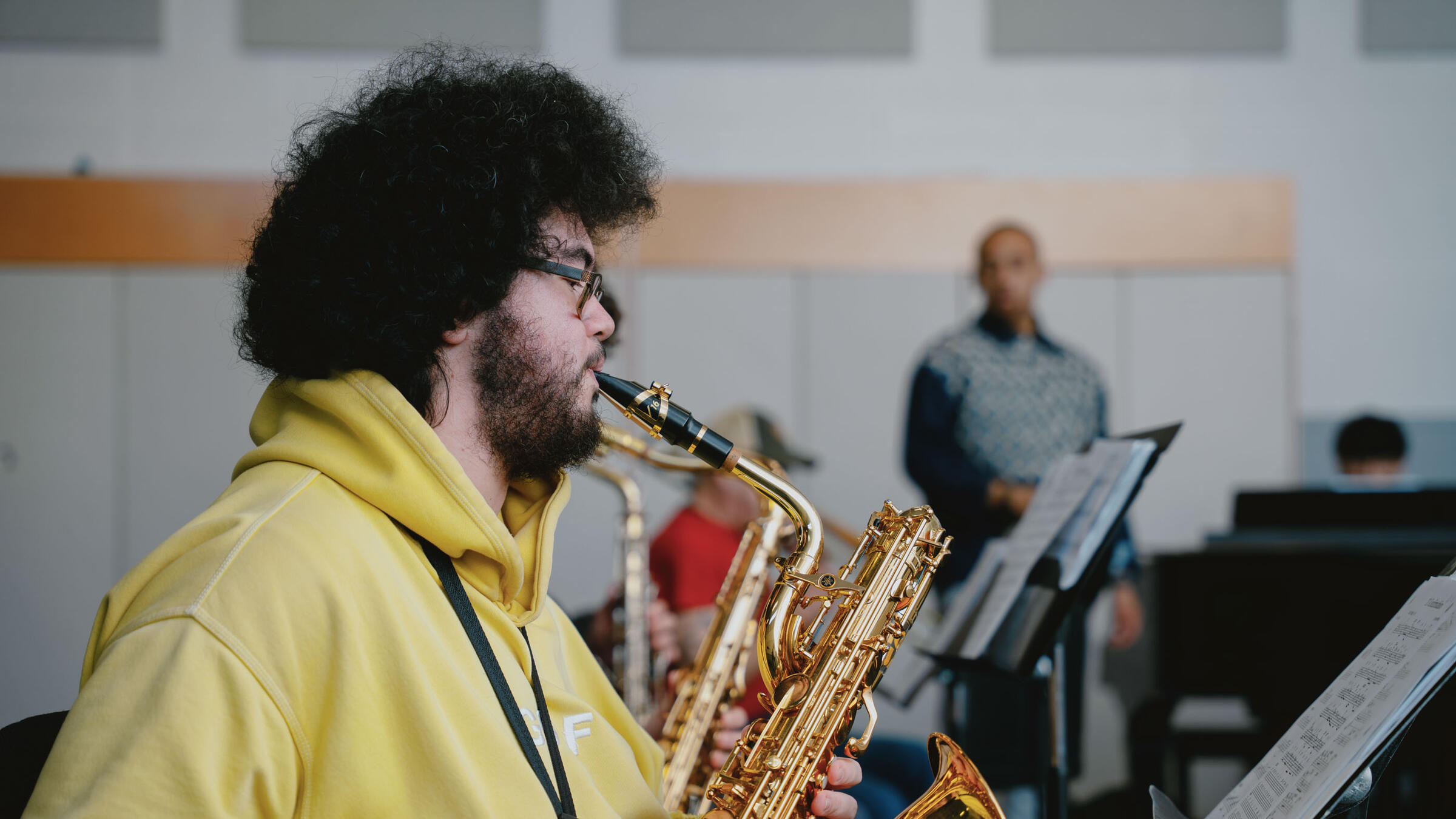
Music: Concentration in Jazz/Ethnomusicology
Bachelor of Music
About this program
The Bachelor of Music in Jazz and Ethnomusicology helps you explore music through a cultural lens. You’ll study jazz as a form rooted in African American history and learn how music shapes and reflects communities around the world. You’ll gain skills in performance, improvisation, composition, and music literacy. You’ll also study global music traditions and learn to think critically about music's social and historical roles.
Program Curriculum and Requirements
Program Scope
An exciting and intensive learning experience, our Bachelor of Music degree trains future educators, performers, and scholars. This high-unit degree prepares students for graduate study or professional careers in the music field. All B.Mus students receive weekly lessons with a member of the applied faculty during each semester of their degree. Candidates for the B.Mus may apply either before or after enrolling at SFSU.
Areas of Study
- Performance
- Composition
- Music Production (No Audition Required)
- Film / Game Scoring
- Jazz Performance
- Music Education
- Music History
Audition Requirements for the Bachelor of Music
Students entering the Bachelor of Music program are required to audition. Please see our Auditions page for further information.
Program Learning Outcomes
- Musical Literacy. Students will demonstrate proficiency in reading, notating, and transcribing music by ear. Students will demonstrate critical listening abilities through describing, analyzing, and articulating artistic and perceptual aspects of music.
- Performance. Students will demonstrate applied performance skills through accurate, and expressive instrumental or vocal performances.
- Creation. Students will be able to express compelling and original musical thought through arranging, composing, and improvising in a variety of styles and for a variety of purposes.
- Critical Understanding of Historical, Cultural, and Aesthetic Contexts. Students will be able to apply historical and cultural knowledge and aesthetic judgement in order to articulate significance and meaning in music within diverse contexts.
- To analyze and perform jazz standards, along with discussion of important artists in jazz history.
- To improvise and compose creatively with nomenclature and sensibilities of the jazz tradition.
- To research and discuss the field of ethnomusicology, its history, theory and methodology, and apply its interdisciplinarity with other areas of the humanities in both written and performative ways.
- To demonstrate critical cross-cultural perspectives regarding various socio-historical contexts of American jazz, and its relatedness to other global practices (particularly of the non-western world).