An Amazonian adventure shifts SFSU student perspectives
An immersive trip to Ecuador gives students a unique firsthand look at climate justice issues
- By Kanaga Rajan
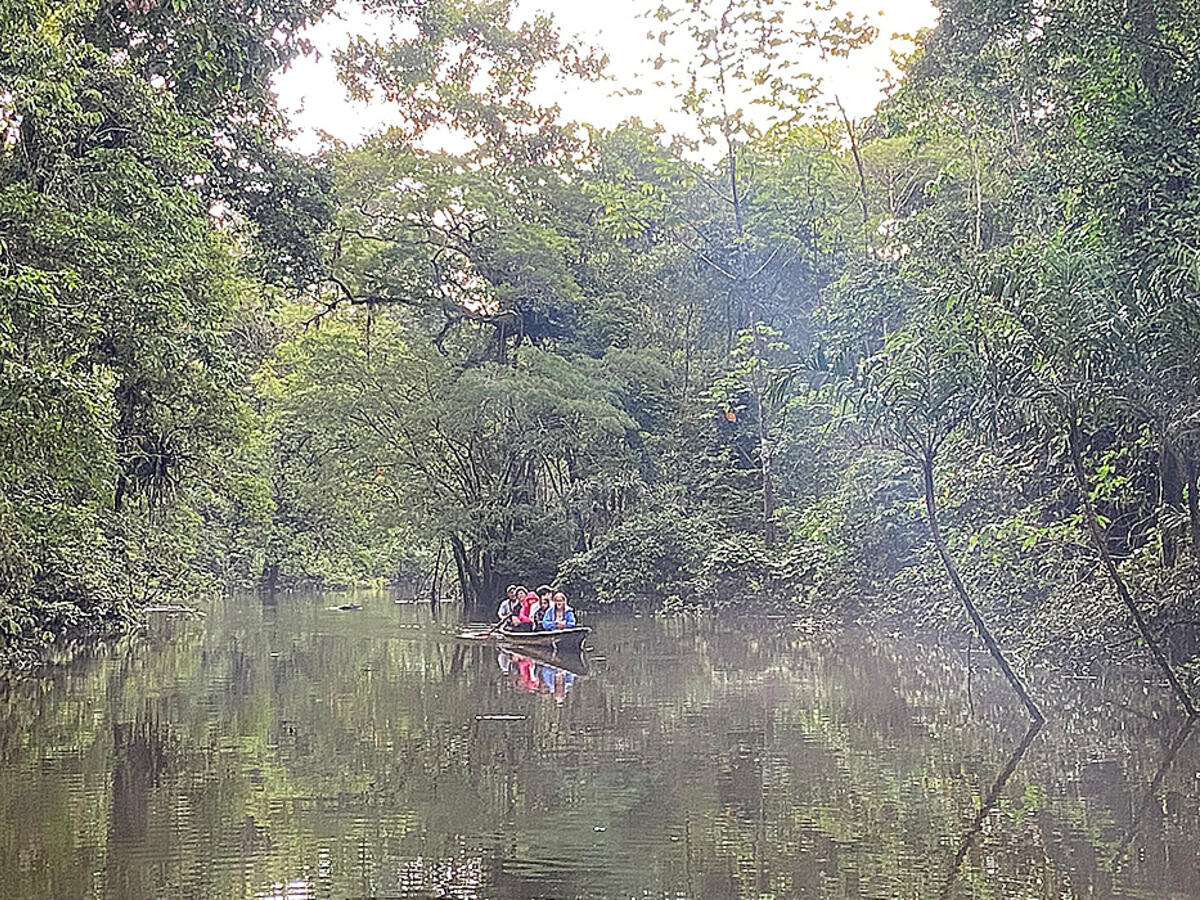
To say this summer’s San Francisco State University class “LS 430: Future of the Forests” was wild may be an understatement. Though Associate Professor of Liberal Studies Logan Hennessy usually teaches the course during the fall or spring semesters, occasionally over the summer he’ll offer a short-term study abroad version that includes a trip to Ecuador. According to his students, this year’s highlight was coming across a footlong dead lizard stuck in the mud while hiking in the Amazon rainforest … and discovering that the lizard was actually a living caiman (a small native crocodile).
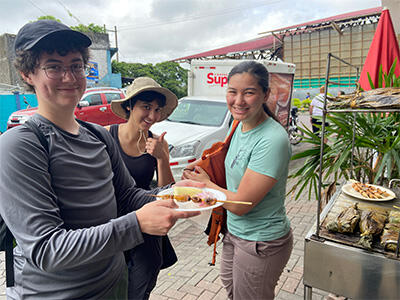
Six SFSU students embarked on this once-in-a-lifetime Ecuador adventure from June 17 to July 8. The jam-packed trip included a stay at the Tiputini Biodiversity Station — located at the edge of Amazonian Ecuador in the most biodiverse forest in the world — as well as a stay at an organic farm in the cloud forest of the Intag River Valley, exploration of the Indigenous cities Otavalo and Cotacachi and sightseeing in Ecuador’s capital of Quito.
“It just changes the way you see the world around you, being in an environment so abundant and full of nature and creatures and community,” said SFSU third-year Isaac Mclaughlan. “People care so much about each other and the world around them.”
At its core, Hennessy’s annual classroom course introduces students to some of the complexities of forest ecology and conservation challenges. “This often means we engage with difficult industrial threats or activities like mining and oil. We also engage Indigenous rights and climate justice components as well,” Hennessy added. “With the field class, students got to see and experience these things firsthand.”
An immersive experience
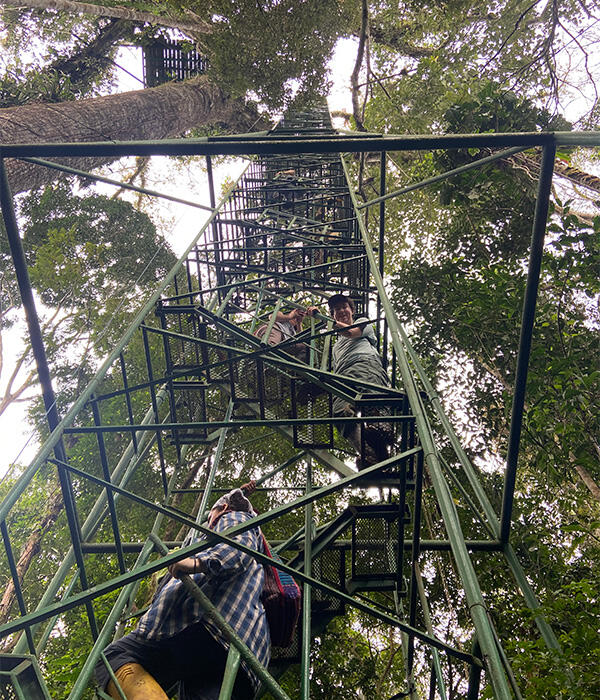
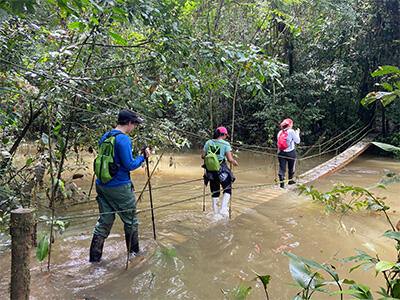
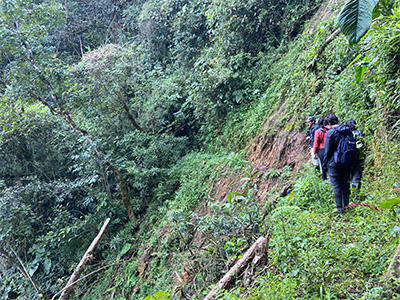
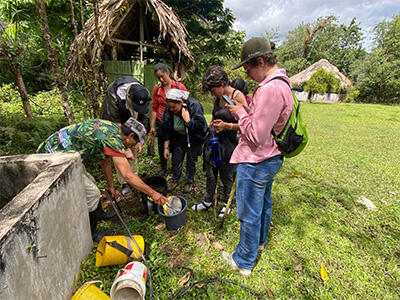
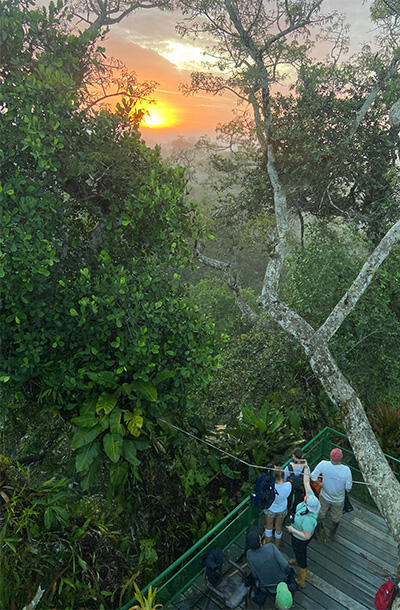
A significant part of the trip was spent at the Tiputini Biodiversity Station. There were lectures, but most of the learning happened on the go. Students trekked through relatively pristine Amazon terrain, swam in the Tiputini River and spotted all sorts of mammals, plants, amphibians and birds. Mclaughlan spotted a pink river dolphin during their boat ride to the station, while Linguistics senior Zoë Gutierrez was awestruck by bioluminescent fungi during a night hike.
“Honestly, this was probably the best part for me — being able to see so many different animals you’ll never see again unless you go back to the Amazon, which is kind of a rare opportunity,” Gutierrez said.
Although the trip was filled with nature-based magic, it was balanced with the harsh realities such as oil production destroying large sections of the rainforest and impacting indigenous communities and biodiversity. Hennessy acknowledges that it can be difficult to witness this firsthand, but he hopes students find inspiration in the local movements.
“Any course on forest ecology and conservation in the tropics would be incomplete without considering the role of Indigenous stewardship as a critical solution strategy,” Hennessy emphasized. “In many ways, Ecuador’s Indigenous communities are leading the global debates over development, conservation, Indigenous rights and climate justice.”
Gutierrez recalls meeting women like Marcia Ramirez, a leader of Defensa y Conservation Ecologica de Intag (DCOIN), an organization for the defense and ecological conservation of the Intag River Valley.
“She was saying the women are really at the forefront of this movement. They are the ones with their kids fighting for their future. It was really cool hearing that perspective,” Gutierrez recounted.
The lasting impact
Mclaughlan also found the people he met just as memorable as the places he visited. Two standouts for him were Roberto and his wife Norma, who run an organic farm. Their generosity, environmental stewardship and deep connection to their community left a lasting impression.
Now Mclaughlan, a double major in Environmental Science and Child and Adolescent Development, is incorporating what he learned into his academic work. He explains that connection to culture is a major milestone in development. For a child development research class, he’s exploring how outside forces — such as colonialism and globalization — have influenced Indigenous communities’ view of their culture, identity and traditional knowledge.
“Child development technically doesn’t have anything to do with the Ecuador class,” he said, “but it’s already shaping the direction I’m taking.”
The trip also shifted how students see their own roles in the world.
“I really started to consider my own impacts on issues like these,” said Gutierrez. The experience — her first time going abroad — sparked a desire to keep traveling and learning. “It’s important to give yourself a new perspective and open your mind to learning new things in a way that might not be comfortable or is completely new to you.”
How you can join the conversation
Though this trip was life changing, students don’t have to travel to Ecuador to understand these important topics and get involved. SFSU and the Bay Area are rich in culture, resources and expertise to help students navigate these topics, Hennessy explains. Talk to people on and off campus, express your interests and curiosity and don’t be afraid to cold call someone, he adds.
“My word of advice is to just get involved anywhere you can. There are lots of opportunities to get involved on campus,” explained Hennessy, noting that a good place to start is Climate HQ, SFSU’s hub for all things climate change. He is part of the steering committee for SFSU’s Certificate in Climate Change, Causes, Impacts and Solutions. There are nearly 50 courses in different majors and colleges that have a climate angle — and fulfill major or general education requirements — that students can take as a standalone course or as part of the certificate.
“It’s a frequent occurrence that students already have two or three courses in the certificate and they didn’t even know it!” he said.
Learn more about the School of Liberal Studies. Students interested in climate issues should visit Climate HQ to learn more about the certificate and other relevant courses and activities.