Science needs YOU, University cell biologist tells students
Professor Blake Riggs reflects on training the next generation of scientists, his proudest accomplishment as a scientist
- By Kanaga Rajan
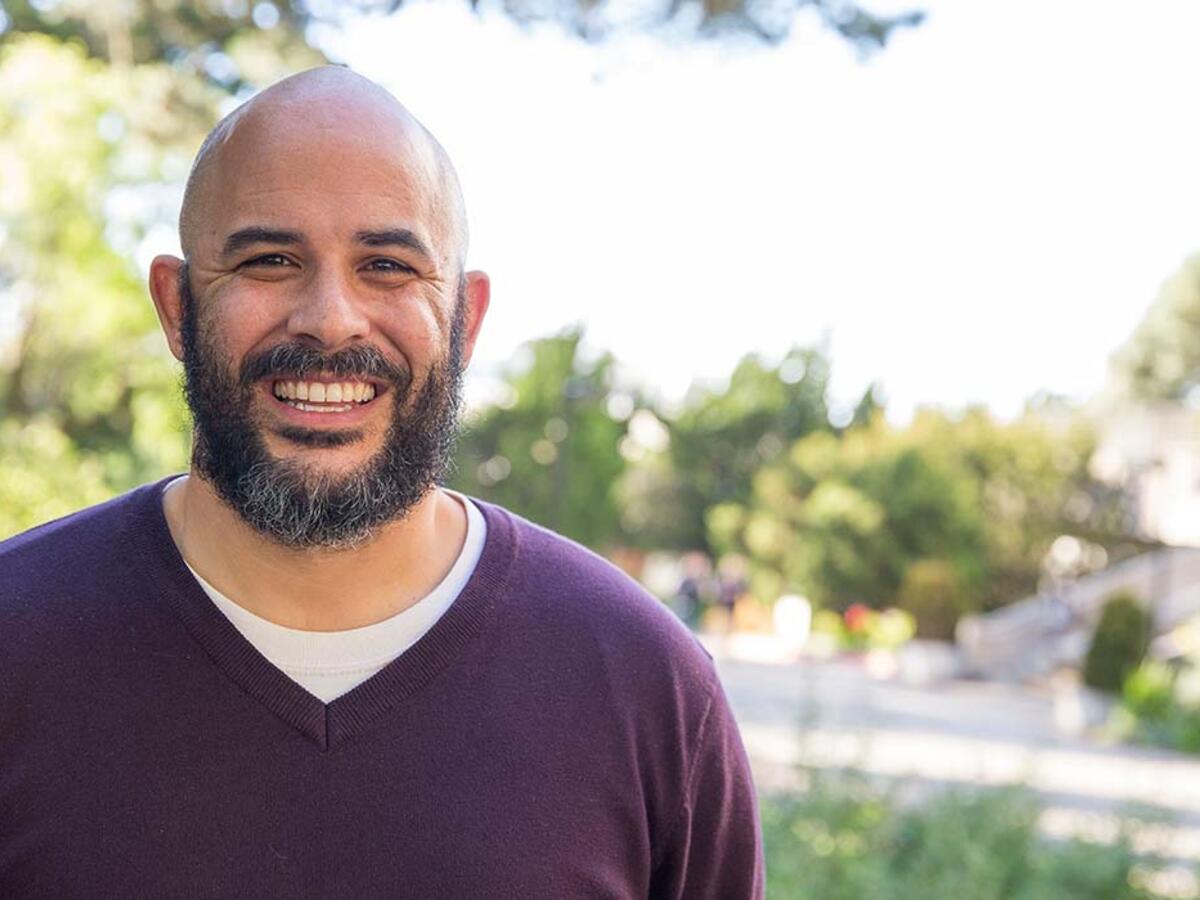
How did San Francisco State University Professor and Associate Chair of Biology Blake Riggs go from studying dolphins to becoming a cell biologist studying cell division (mitosis)? He’s not shy about sharing the story, and he makes sure to include his failures along with his successes. It’s important to include the missteps, he explains, to connect with students.
Riggs’ research lab studies how organelle movement and organization within cells influence cell function and activity. Specifically, his group asks how and why organelles are inherited by new cells and how these cellular components affect development of cell fate. Since joining San Francisco State in 2010, Riggs has mentored over 81 students — something even he was shocked to realize when he saw the tally.
Currently the faculty adviser of the Black Excellence in STEM (BE-STEM) student group, Riggs believes anyone can be a scientist. He sat down with SF State News to share how he’s trying to shift the STEM field.
As a scientist, what are some of your proudest accomplishments?
My proudest moments have to do with the training of the next generation of scientists. I want those scientists to look like our society. We have a lack of Black and Brown scientists, and that comes from a funneling down of opportunities. Many of the students I’ve trained would not have had opportunities in science. I’m getting [students] to understand that they are needed in science, they have the ability to do science and they can be rock stars in science. …
A mentoring moment I had is when I would have lab meetings with my students. We would meet and go over research. [Students] present their stuff and I’m critical and we go back and forth. And then my lab had a joint lab meeting with a lab at UCSF. … [After, a student says,] “Oh man, Dr. Riggs. This is just like our lab at SF State because the meeting was just like our meetings.” And I’m like there’s no magic there. They don’t wave magic wands. It’s not Hogwarts. They do science, and we do science. There’s a lot they have that we may not have, but what we do have — and they don’t have — is you. They want you.
What is your role or what are your goals as a mentor and educator?
That’s a big question. I believe that everyone has a place in science and I wish that people truly valued diversity, instead of using it as a talking point. I think the way we think about and practice our science is a bit backwards. We look for the people with the best grades. … We never think about the most creative person. What about someone who thinks about things differently? …
I try to encourage everyone to not give up, because unfortunately our training environment and the way we’ve practiced science in the past has been very exclusive. It’s something that I’m still battling. We’ve got a lot of world problems [like climate change]. If we’re going to solve these problems, we need everybody. Some of the best answers and best inventions come from marginalized communities. And since it’s Black History Month, I would say that Black people in general are natural-born inventors and creators. We’ve always been creators. Think of that talent pool that we’re not targeting, we’re not inspiring — that’s the issue.
You’ve talked about how it’s not enough to simply show a Black or Brown face or a woman scientist but that students need something to connect to. How do you connect with students?
I think it’s by being honest and being real. Students think that I became a professor because I was just the smartest person in the room and I was always just scholarly and things that I did work. I’ve been very honest. I’ve made a lot of mistakes. I’ve been kicked out of labs. I had down times. To get from point A to B, I had to go through Z, Y, T and stopped off at Q for a little bit. Sharing your stories is where you connect with people. Being honest is where you connect with people. … What matters is getting students to recognize their potential and the awesomeness of themselves, and that comes from sharing your story.
In 2020, you were on a list of 1,000 inspiring Black scientists in America. What does it mean to be an inspiring Black scientist?
It’s an honor. In some ways it’s a little surreal because I’m on there with Neil deGrasse Tyson and Mae Jemison. These are people I see as being famous. They’ve done amazing things. I always say this: I may or may not discover something in science, but I can be that person that inspires the next generation of scientists …
[I don’t know] how inspirational you have to be to be [on the list]. … But it’s something that is necessary for our students to see. The sad part is you can go through your whole educational career and not see a scientist that looks like you and not see an educator that looks like you. To know there’s a list out there of a 1,000 people who look like you and are doing stuff — that can be very inspiring for that next generation. I try to live up to that.
Visit SF State’s Department of Biology website to learn more about Riggs and other faculty. Students interested in BE-STEM can email bestemsfsu@gmail.com.